I have two personalities. Personality A loves beautiful, leather-bound notebooks and fountain pens. Personality B loves Notion databases, searchable tags, and cloud syncing.
For years, I flip-flopped between them. I’d start a gorgeous notebook for French, lose it, start a Google Doc, forget about it, and repeat the cycle. Eventually, I realized: neither is perfect, but together they are unstoppable.
Here is the breakdown of the Digital vs. Analog war, and how to actually win it.
The Case for Paper (The Brain)
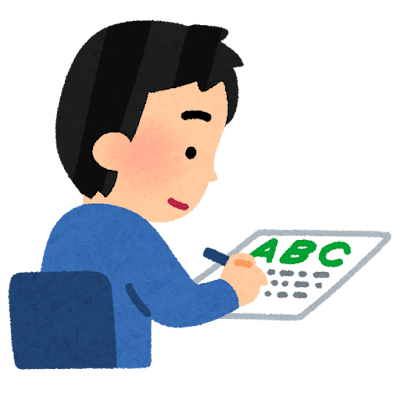
There is actual science here. Writing by hand forces "encoding." You can't write as fast as you hear, so your brain has to summarize and process the information before your hand moves.
Best for:
- Initial Learning: When I'm in a class or watching a lesson, I always write by hand. It stops me from zoning out.
- Scripts: If you are learning Chinese, Japanese, or Arabic, you must write by hand. Muscle memory is the only way to learn characters.
- Freedom: You can draw arrows, circle things, and make marginal notes without fighting formatting menus.
The Case for Digital (The Archive)

Paper has one fatal flaw: You can't Command+F a notebook. As you advance, your vocabulary list gets too big to flip through.
Best for:
- Vocabulary Databases: I use Notion to track words. I can tag them by topic (Food, Travel) and filter them instantly.
- Spaced Repetition: Anki is the king here. Digital flashcards handle the scheduling for you.
- Media: You can paste a screenshot of a grammar table or a link to a YouTube video pronunciation guide.
The "Hybrid" Workflow
Here is the system I finally settled on that stops me from losing my mind:
- Capture Analog: During study sessions, I use a messy, cheap notebook. I scribble. I make mistakes. I don't worry about it looking pretty.
- Process Digital: Once a week (usually Sundays), I go through my messy notebook. I pick out the valuable stuff—the words I actually want to keep, the grammar rules I need to remember—and I transfer them into my digital system (Notion/Anki).
Why this works:
- The act of typing it up counts as a Review Session. I'm interacting with the material a second time.
- My digital database stays clean because I'm only adding the "good stuff," not every random scribble.
- I get the tactile benefit of writing and the searchability of digital.
Don't over-optimize
The trap is spending more time setting up your Notion template than actually learning the language. If you are spending 3 hours tweaking fonts and 0 hours conjugating verbs, you are procrastinating, not studying. Pick a tool. Stick to it. And remember that the "best" note-taking system is the one you actually use.
Analog vs. Digital: The Verdict
| Feature | Paper (Analog) | Digital (App/PC) |
|---|---|---|
| Memory Retention | High (Encoding) | Low (Mindless typing) |
| Searchability | Zero | Instant (Ctrl+F) |
| Portability | Heavy | Cloud-synced |
| Scripts/Symbols | Essential | Difficult |
| Multimedia | Impossible | Audio/Video embedding |

